
| For Hidden Transmitter Hunting or Fox-Hunting
|
Parts List
Tools required
|
|
Step 1 Cut an 11 1/2 inch, a 7 inch, and two 5 inch pieces of PVC pipe. Before cutting the pipe, it might be helpful to measure and mark the length using a sharpie black marker.
|
|
Step 2 Glue an end cap on each 5 inch (short) pipe.
|
|
Step 3 Glue the two long pipes together using a cross connector (as pictured).
|
|
Step 4 Glue the two remaining cross connectors on to each end of the assembly from step 3. Make sure to align the cross connectors. An easy way to align the connectors is to place them on a flat surface before the glue sets and twist them to be flat with the surface.
|
|
Step 5 Glue the two short pieces with end caps to each end of the assembly from step 4.
|
|
Step 6 Cut four pieces from the inexpensive tape measure: 41 3/8 inch, 35 1/8 inch, and two lengths of 17 3/4 inchs. Be careful not to cut yourself on the sharp corners or ends. Apply short pieces of black tape on each long section, and on only one end of the two shorter pieces. This is for protection from the sharp edges.
|
|
Step 7 Attach the longest (41 3/8 inchh) piece of tape rule to the cross connector closest to the center cross connector. It will be helpful to mark the center point (20 11/16 inches) with a black sharpie marker. Position the tape over the cross connector, so the curve of the tape rule is similar to the curve on the cross connector. Center and secure the element with hose clamps on each side as pictured. Attach the next longer element (35 1/8 inch) to the cross connector at the other end of the boom in a similar fashion.
|
|
Step 8 Prepare the hairpin tuning match by bending it into a “U” shape about 3/4 inch wide and tinning the ends of the wire.
|
|
Step 10 Scrape about 1/4 inch of paint off of the two remaining pieces of tape rule from the untaped ends. Tin the bare areas, then attach the hairpin match and coax wire.
|
|
Step 11 Next attach this assembly to the boom using two hose clamps (as pictured below).
|
|
Step 12 Secure the coax wire to the boom with a zip tie or black tape. The antenna is now ready to use.
|
|
Construction plan written and photographed by Tom Niderost, K4TMN |


MIZUHO MX SERIES
If there is one Mizuho radio most QRPers are familiar with it’s probably the MX series SSB/CW HF handhelds, though not everyone knows them by that name. The two watt HF and one watt VHF versions introduced in 1983 and were produced until 2002, a total of 19 years, making the Mizuho MX series handhelds probably the rigs which lasted longest on the market of any ham transceivers ever produced. As a whole, the MX or Pico transceivers were in production for 21 years. If you don’t know them under the Mizuho name, perhaps you’ve seen them as the AEA DX-Handy or with Santec’s JIM nameplate. Models have been made for every band from 80m up through 2m including 12m and 17m. Only 30m has been excluded. The MX series remain popular with QRPers the world over.
WATCH THE VIDEO
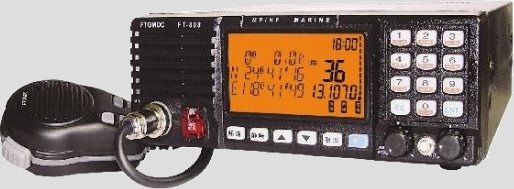
FEITONG FT 808 primo apparato HF Cinese
Functions:
Dual mode:shortwave and ultra-shortwave
Dual channels to receive signals,
Distress call, selective cass, group call and all call,
Display anti-collision alarm,
Large LCD.
Specifications:
Frequency range: Rx 0.5-29.999999MHz
Tx 1.6-29.999999MHz
Mode: USB, LSB, CW, RTTY, AM
Memory channels: 100
Power supply: 13.8V DC(±15%)
Current drain (at 13.8V): Receive Standby 1.4A
Transmit Max. power 25 A
Operatable temp. range: -10℃ – +60℃; 14℉ – 140℉
Dimension(WxHxD): 240x200x65mm
Weight: 4kg
Reciever:
Reveive system: Double-conversion superheterodyne system
Sensitivity(12dB SINAD):
0.5-1.5999MHz: SSB, CW, RTTY≤1uV , AM≤10uV
1.6-29.9999MHz: SSB, CW, RTTY≤0.5uV, AM≤2uV
Squelch sensitivity(threshhold): SSB, CW, RTTY Less than 5.6uV
Selectivity: SSB, CW, RTTY: More than 2.1 KHz/-6dB,
Less than 4.5 KHz/-60dB
AM: More than 6 KHz/-6dB,
Less than 20 KHz/-40dB
Spurious and image rejection ratio: More than 70dB(1.6-29.9999MHz)
RIT variable range: ±150Hz
Audio output power(at 13.8V DC): More than 2.0W at 10% distortion with an 8Ω load
Transmitter:
Ourput power: SSB 100W AM 40W
Modulation system: SSB Balanced modulation
AM Low level modulation
Spurious emissions: Less than -50dB Below peak output power
Carrier suppression: More than 40dB
Unwanted sideband: More than 50dB
WATCH THE VIDEO
About IV3VJH
Hello
My name is Emanuele, and I was born in 1978 here in San vito al Tagliamento 80 km near Venice in Loc: JN65KV.
I’m on air since I was 13. I Started with a citizen band in the middle of 90′s and soon I discovered the exciting world of DX, So I investigate a bit on single side bands, and started making contacts all over the world.
During that years CB radio was very popular, and during the following years I started my BCL activity too, QSLing with several Broadcasters world wide, and enjoying the art of low signals reception.
My interests in ham radio covers many aspects, but mainly on dxing and antennas. I love all digital mode, expecially opera,ros.bpsk,rtty,sstv,feld hell that are my favorite.
Enjoy your visit in my webblog and leave a comment here below.
73s de IV3VJH Emanuele

When I was 15 with my Kenwood ts 190s
“Radio Hams” Film (Pete Smith Specialty)
From 1939.
The new Hamband video
A new song and video about rebuilding a ham radio station – including teaching the viewer morse code
Join Us in the Airwaves by The Ham Band
A new high quality version of this crazy video about ham radio.


 IV3VJH AMATEUR RADIO STATION